
When World Class Resources Aren’t Enough

The AI Intelligence Layer Behind High-Performing Hotel Portfolios
The Challenge
A leading hotel management company operates 200+ properties with world-class corporate resources: dedicated revenue management teams, proprietary technology platforms, regional support, and comprehensive training programs. They invest millions annually in giving properties every advantage.
Yet despite every advantage, results were inconsistent and difficult to replicate.
Despite identical resources, similar properties in comparable markets delivered wildly different results. The culprit? Corporate sophistication has become corporate overload.
The Problem: Plenty of data, not the right data at the right time
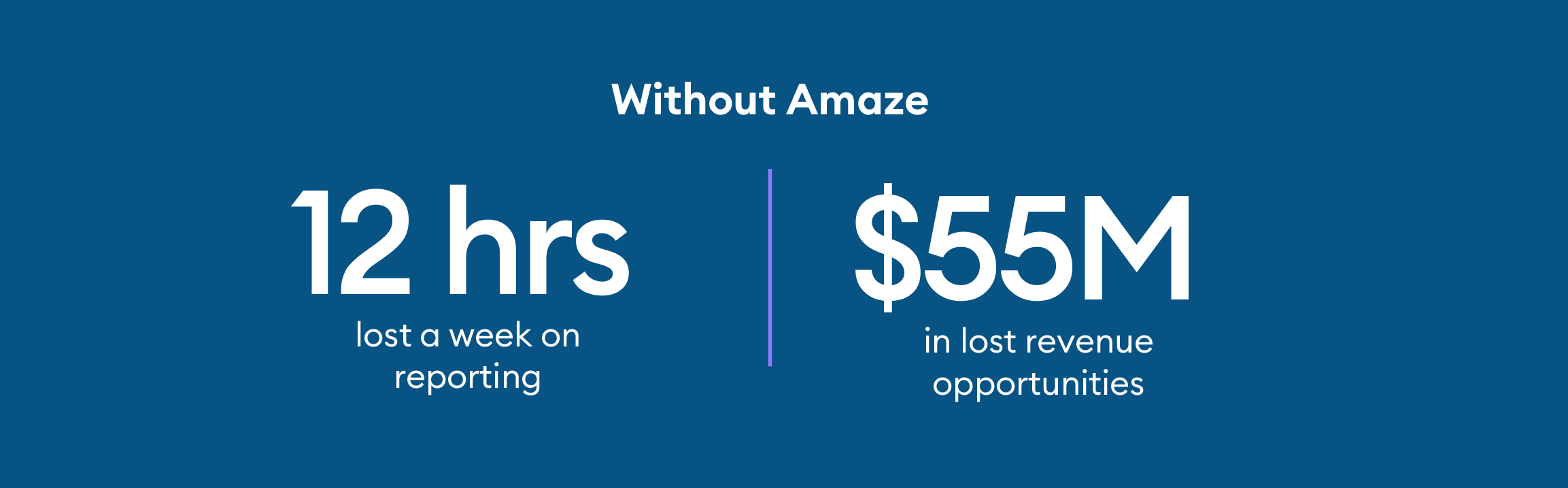
Property Directors of Sales Spent:
- 4 hours/week pulling data from 6-8 different systems and reconciling discrepancies
- 2 hours/week reformatting the same data for different stakeholders (GM, ownership, corporate)
- 6 hours/week in meetings and processing 47+ weekly corporate emails
- Only 14 hours/week (28%) actually driving revenue.
"We created this paradox," the VP of Sales Operations admitted. "Every tool we give them is designed to help. But each one adds complexity. Nothing ever gets retired, it just accumulates. We only ever add, never subtract."
Corporate Sophistication, Operational Friction
Innovation Without Subtraction: New SVP introduces funnel velocity metrics. Previous SVP's reports stay mandatory. Now tracking 40+ metrics, most irrelevant to daily decisions.
- The Silo Effect: Revenue, sales, catering, and corporate each have separate dashboards. The DOS manually integrates everything.
- One-Size-Fits-All Reporting: Corporate builds comprehensive reports for 200+ properties. For any individual property, 60% is irrelevant.
- The Talent Drain: Recruit superstars. Six months in, they're buried in admin. Eighteen months in, they're gone. Average DOS tenure: 18 months. Cost per turnover: $150K-$300K.
Portfolio Impact:
- $50M+ in annual missed opportunities (slow response times vs. nimble competitors)
- $4.5M+ in annual turnover costs
- Eroding market share in key markets
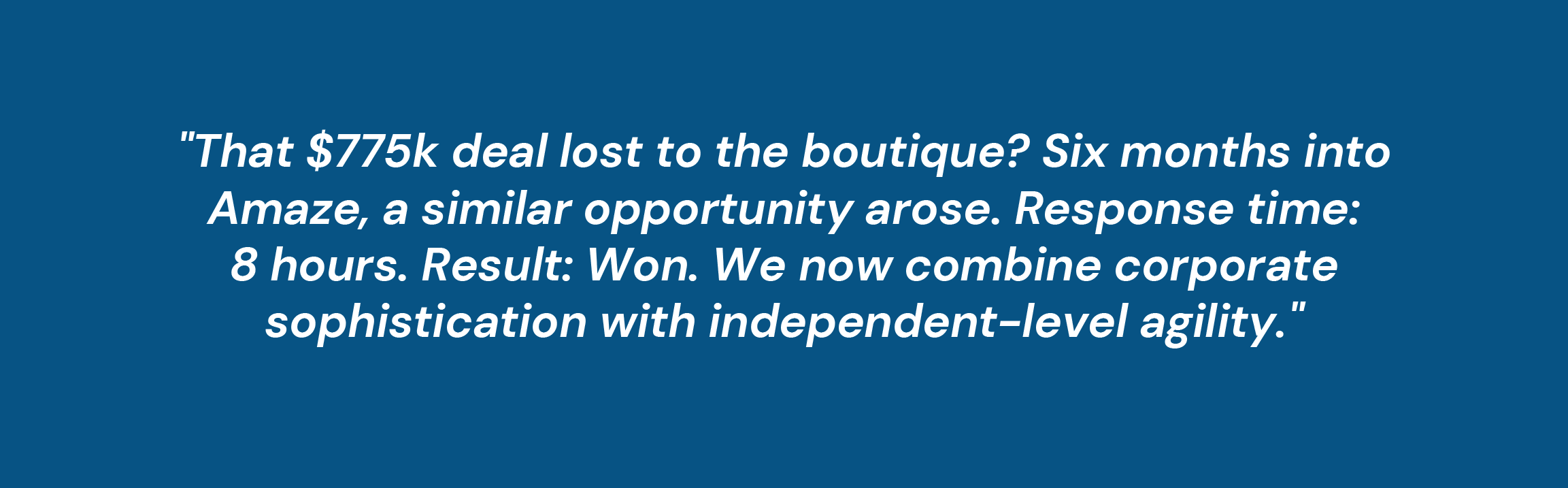
"Our sophistication became an anchor," the VP reflected. "A convention property lost a $775k block to an independent boutique. They responded in 6 hours. We needed 3 days—corporate consultation, data from three systems, approvals. The client moved on."
The Strategic Solution: Amaze as Intelligence Layer
The leadership question: How do we leverage corporate excellence without overwhelming our properties?
The answer wasn't another tool or more resources.
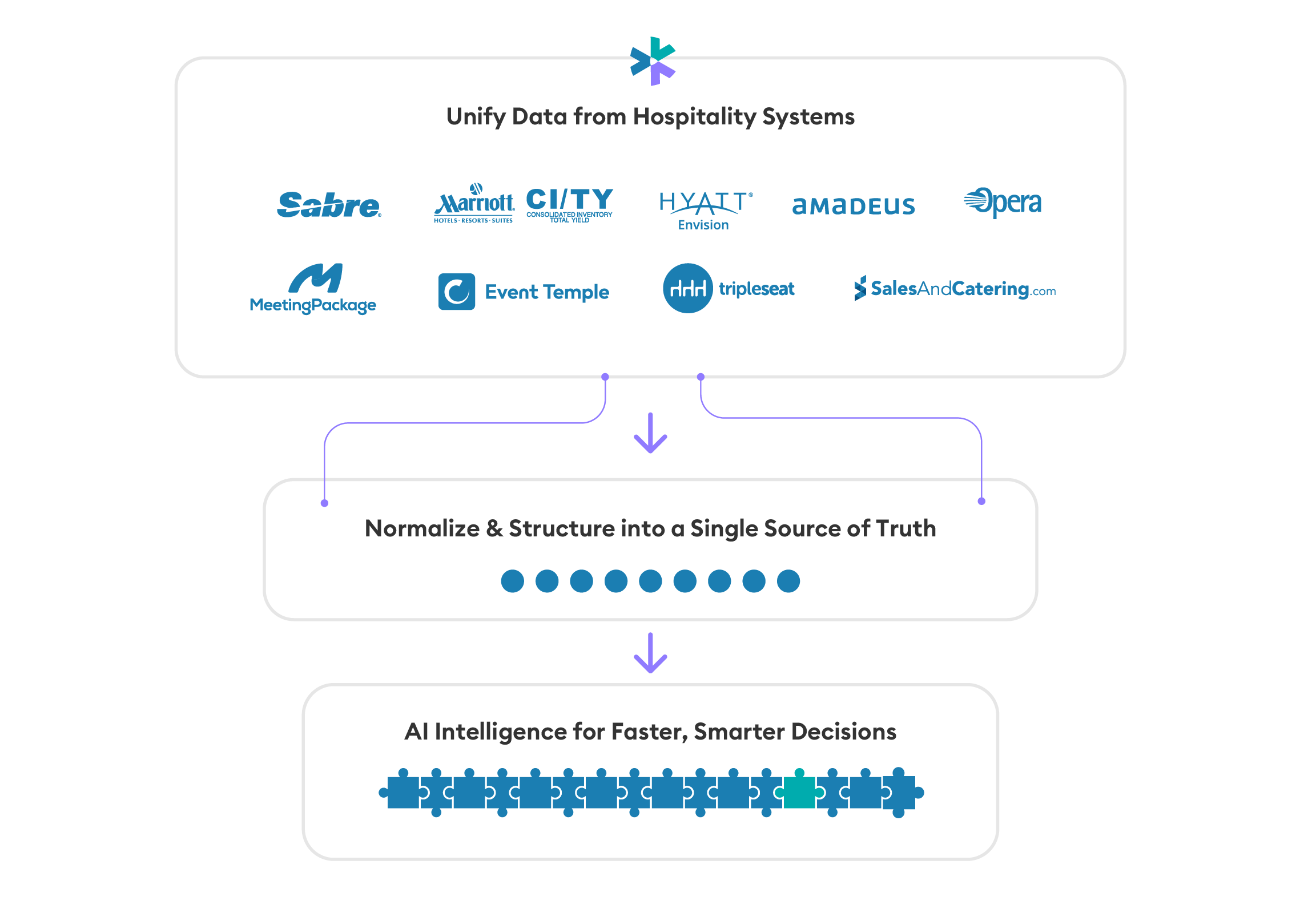
- They needed an intelligence layer that could:
- Unify disparate systems without adding complexity
- Filter corporate resources for property-specific relevance
- Preserve institutional knowledge across turnover
- Enable speed without sacrificing discipline
After evaluation, they deployed Amaze across a 25-property pilot.
What Amaze Delivered
1. Unified Intelligence, Not Data Aggregation
Instead of 40 metrics requiring 2 hours to compile, Amaze synthesized data from existing systems into instant insights:
- Group pace down 12% in Q2 (priority)
- Conversion up 18% on corporate segments (leverage this)
- Under-booked April weekends (opportunity)
- 3 high-probability leads expiring this week (act now)
2. Customization at Enterprise Scale
Corporate reports serve everyone, so they're generic.
Amaze delivered property-specific intelligence:
- Convention Properties: compression patterns, citywide correlation
- Resorts: seasonality trends, shoulder optimization
- Suburban: corporate penetration, weekday patterns
- Airport: day-of-week variance, negotiated rates
"Every property gets their own dedicated analyst who knows their market—but it's intelligent software, not expensive headcount."
3. Hierarchical Intelligence
- Portfolio Level: Executive dashboards across all properties
- Property Level: Overall health, critical issues, opportunities
- Tactical Level: Detailed segment and funnel analysis
Regional Directors and property leaders view the same data. They skip 45 minutes of context-building and jump straight to strategy. That efficiency, multiplied across hundreds of visits annually has been transformative.
4. Institutional Knowledge Preservation
- DOS turnover cost 6-9 months of lost productivity per transition. Amaze became the institutional memory:
- Historical account performance
- Conversion patterns by segment and season
- Pricing strategies for specific market conditions
- Lead sourcing and booking windows
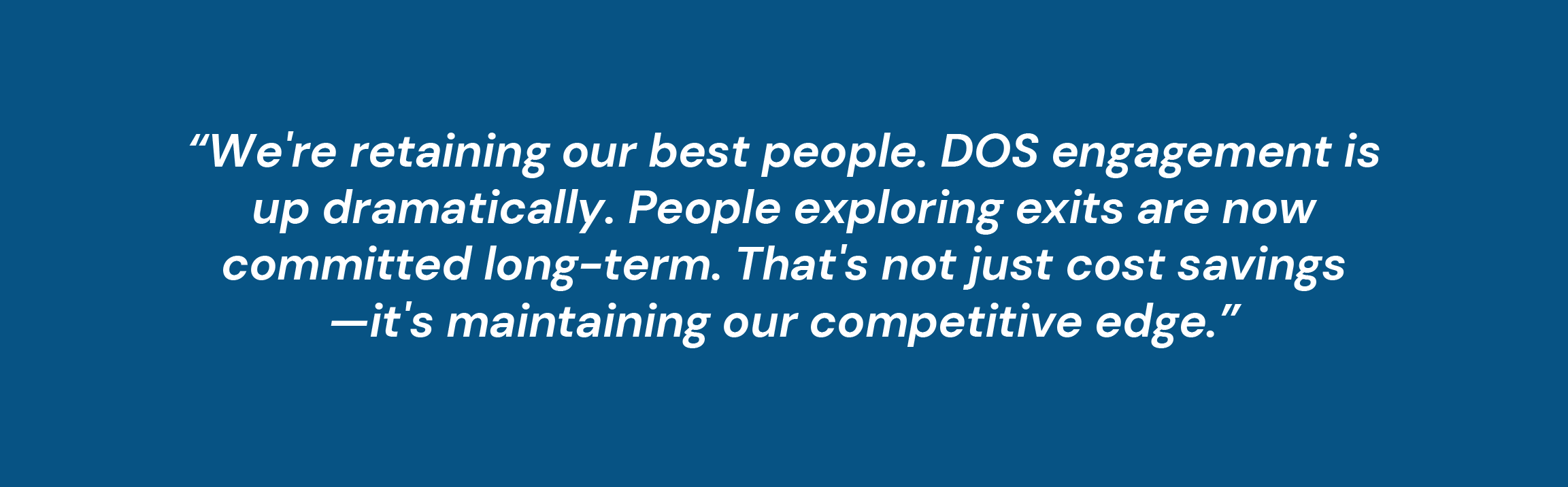
"Replacements are productive in month two instead of month nine. Across our portfolio, that's millions in retained revenue."
Portfolio Results: 12-Month Pilot (25 Properties)
Productivity Transformation:
- Data compilation time: -75% (8 hrs/week → 2 hrs/week)
- Revenue-generating time: +100% (14 hrs/week → 28 hrs/week)
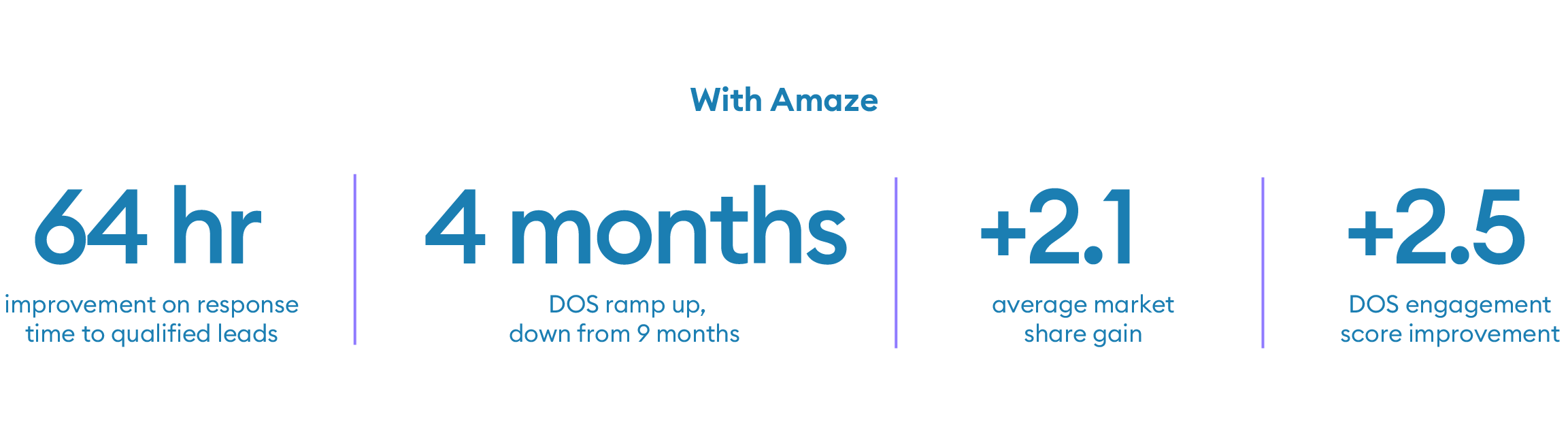
- DOS tenure: 18 months → 32 months average
- New DOS ramp-up: 9 months → 4 months to full productivity
Performance Impact:
- Portfolio group conversion: +19%
- Market share gain: +2.1 points average
- Response time to qualified leads: -89% (72 hrs → 8 hrs)
- DOS engagement scores: 6.2/10 → 8.7/10
The Investment Thesis
"We don't need more data, we have all the data. We don't need smarter people, our teams are exceptional. What we needed was the intelligence layer that makes our sophistication accessible and actionable at the property level.
Amaze doesn't replace our corporate excellence, it finally lets us leverage it at scale.
Our revenue management teams provide better guidance. Our regional directors have better conversations. Our property leaders can actually execute instead of drowning in complexity.”
— VP of Sales Operations, Leading Hotel Management Company
Share This Story. Choose Your Platform!
