
Why Unified Data Is the Foundation of Modern Hotel Sales Strategy
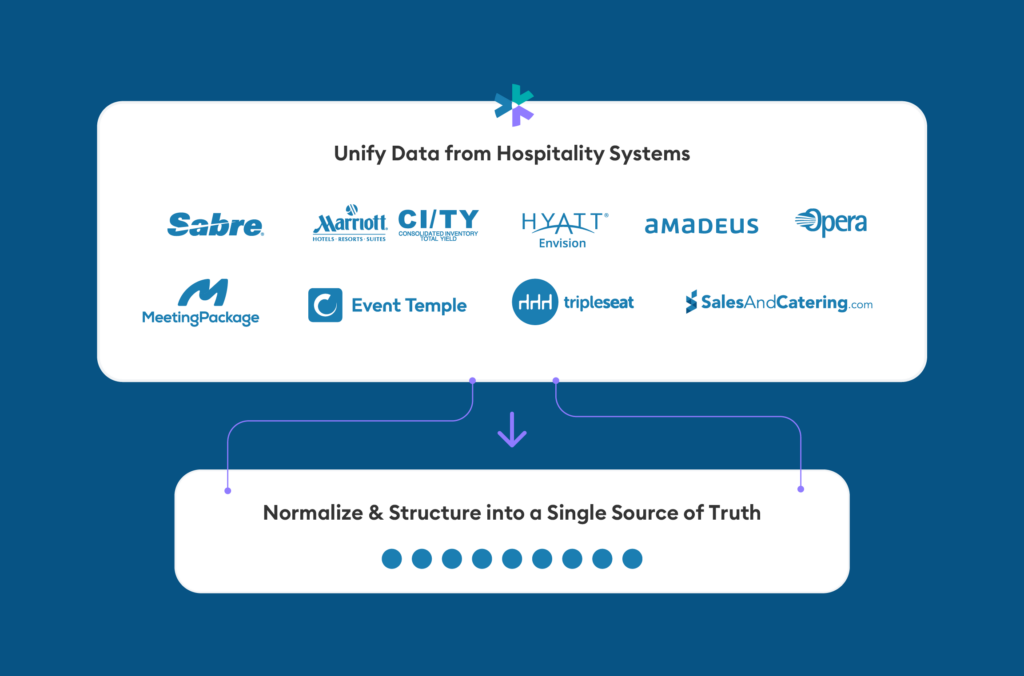
Hotel sales teams have more data than ever before. CRM platforms, sales and catering systems, revenue management tools, PMS data, and brand reporting all generate valuable insights.
But for many organizations, that data lives in silos.
And siloed data doesn’t create strategy. It creates friction.
Modern hotel sales success depends on one critical capability: unified data.
The Problem: Too Many Systems, Not Enough Insight
Most hotels rely on multiple systems to manage group business:
- Sales & Catering platforms
- PMS systems
- Brand reporting tools
- Revenue management platforms
- CRM databases
- Corporate dashboards
Each system answers part of the story, but none provides the full picture.
As a result, sales leaders spend hours pulling reports, reconciling numbers, and preparing presentations instead of focusing on revenue-driving work.
When data is fragmented:
- Decisions take longer
- Priorities become unclear
- Opportunities are missed
- Strategy becomes reactive
Unified data changes that dynamic entirely.
What Unified Data Actually Means
Unified data is not just integration.
It means:
- Normalizing information from multiple systems (translating all of your hotel’s data into one consistent structure so you can see the full picture clearly).
- Creating consistent definitions and metrics
- Providing a single source of truth
- Keeping insights current and actionable
When done correctly, unified data allows sales teams to move from reporting to decision-making.
Why Unified Data Drives Better Sales Performance
Organizations with unified data consistently outperform because they can:
→ Identify High-Value Opportunities Faster
Lead scoring and demand patterns become visible immediately.
→ Align Sales and Revenue Strategy
Sales teams understand when to push rate and when to prioritize volume.
→ Respond Faster to Market Changes
Up-to-date insights replace lagging reports.
→ Eliminate Administrative Waste
Hours spent compiling data are redirected to selling.
The Competitive Advantage: Speed and Clarity
In hospitality, speed matters.
The hotel that responds first often wins the business.
Unified data gives teams:
→ Faster response times
Respond to qualified leads 30–50% faster, improving first-touch advantage and increasing win rates.
→ Clearer priorities
Focus on the highest-value opportunities, helping teams improve conversion rates by 10–20% while reducing time spent on low-probability leads.
→ More confident decisions
Access consistent performance insights across segments, pacing, and production, enabling leaders to adjust strategy weeks earlier than traditional reporting cycles.
→ Stronger alignment across departments
Sales, revenue, and leadership teams operate from the same data foundation, reducing reporting reconciliation time by 40–60% and improving accountability.
It transforms sales from reactive to strategic.
The Future of Hotel Sales Is Data-Driven
Modern hotel sales strategy is no longer about intuition alone.
It’s about combining:
- Human expertise
- Market knowledge
- Unified intelligence
Hotels that unify their data unlock performance that was previously impossible.
The Power of Truly Unified Data
Modern hotel sales strategies cannot run on fragmented systems and delayed reporting. Amaze redefines what unified data means by bringing together information from your sales, catering, CRM, and PMS platforms into one consistent, decision-ready view, without manual reconciliation.
The result is measurable impact: teams respond to opportunities up to 50% faster, improve lead conversion by 10–20%, and reduce reporting preparation time by 40–60%, all while gaining clearer visibility into demand and performance.

Share This Story. Choose Your Platform!
